
By Suzanne Révy, Associate Editor
“All architecture is shelter, all great architecture is the design of space that contains, cuddles, exalts, or stimulates the persons in that space.”
~Architect Philip Johnson (1906-2005)
Late in the afternoon, I see the door to my bedroom is slightly ajar. The sun is setting, and there is a certain slant of light emanating from behind it. That light invites me to enter, and I do. I am greeted by the pictures of my children on the walls, a chair with some clothes draped over it, and a comfortable bed adorned with too many pillows. The walls are painted a soft light green, but they take on the yellow hues of the late afternoon, which will give way to a cooler color palette as evening envelopes the house. The bedroom is familiar and comforting. There is a palpable emotional connection to the spaces we inhabit. “Lived Space: Humans and Architecture” currently on view at the deCordova Museum in Lincoln, Massachusetts through September 30, 2018 explores the ways we experience architecture in both domestic and public spaces in a multi-disciplinary show that features many superb photographs.
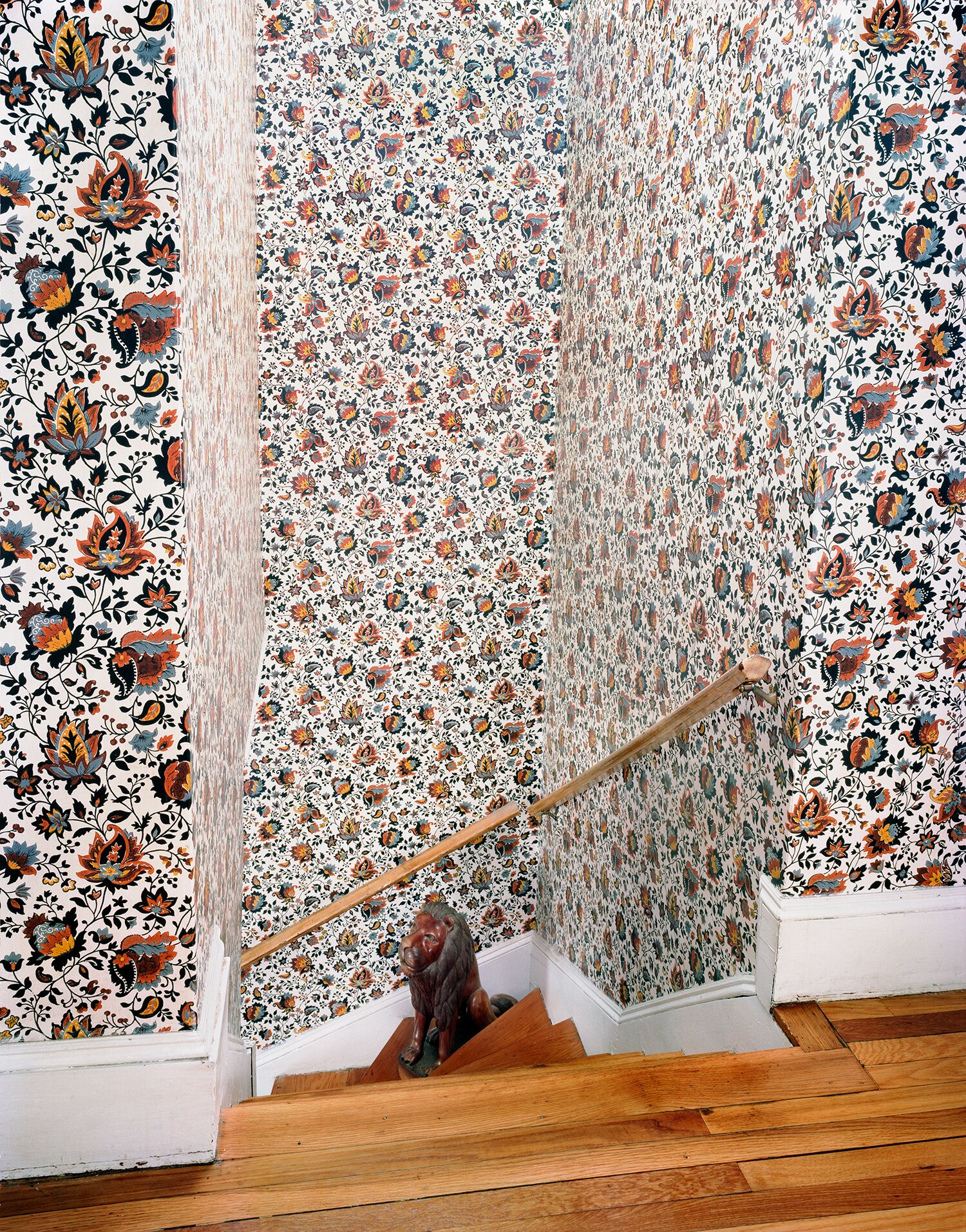
“Untitled Interior (Lion in Stairwell)”, 2002, by Sarah Malakoff, c-print, Museum Purchase with funds provided by Joyce and Edward Linde, Courtesy of the artist and Howard Yezerski Gallery
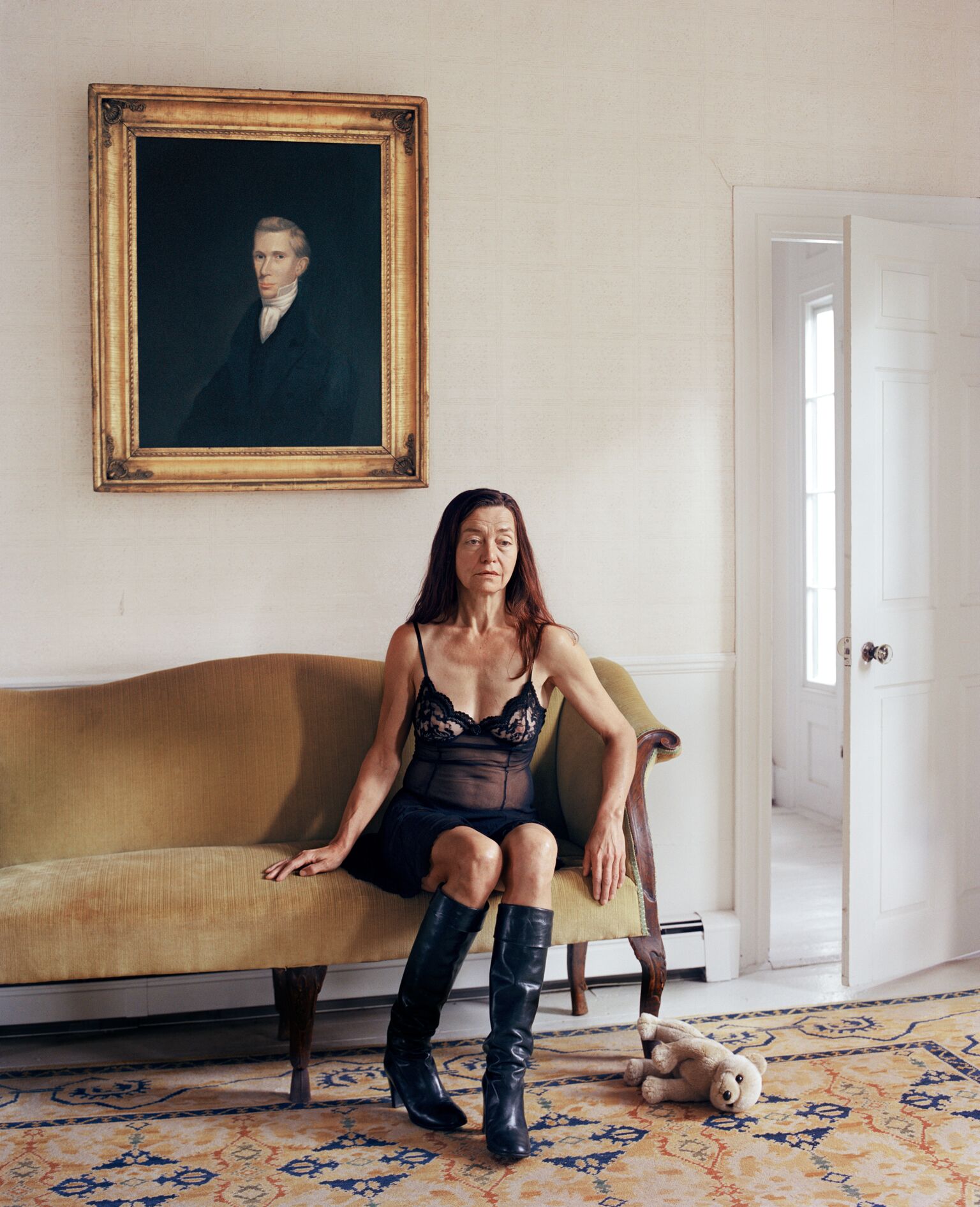
“Untitled (Judith #2)”, 2002/2008, by Jocelyn Lee, from the PRC Portfolio, C-print, Museum Purchase with funds provided by Cathy England and the Dr. Beatrice H. Barrett Fund, courtesy of the artist
The show is presented in the Dewey Family Gallery and organized into three sections: “Interior Worlds,” “Figure and Form,” and “Architectural Fantasies.” “Interior Worlds” features images of domestic spaces, both empty and occupied, and each carries the imprint of the human experience. Morgan Cohen’s subtle study of light in the corner of a room is a strikingly minimal and abstract rendering of the building blocks of our homes, while Sarah Malakoff’s Untitled Interior (Lion in Stairwell) offers a psychological glimpse through patterned wall paper and figurines that have brought an idealized vision of wildlife into a tamed space. Several pictures include the occupants, such as a softly muted portrait by Jocelyn Lee depicting a woman seated in a sparse yet formal household interior wearing boots and lingerie; she is framed by an oil painting above and a discarded toy on the floor. An open door to the right of the frame reveals an adjoining space immersed in cooler light, but it is the occupant’s tense expression and body language within a room of faded elegance that raises questions about how we navigate our private and public lives.
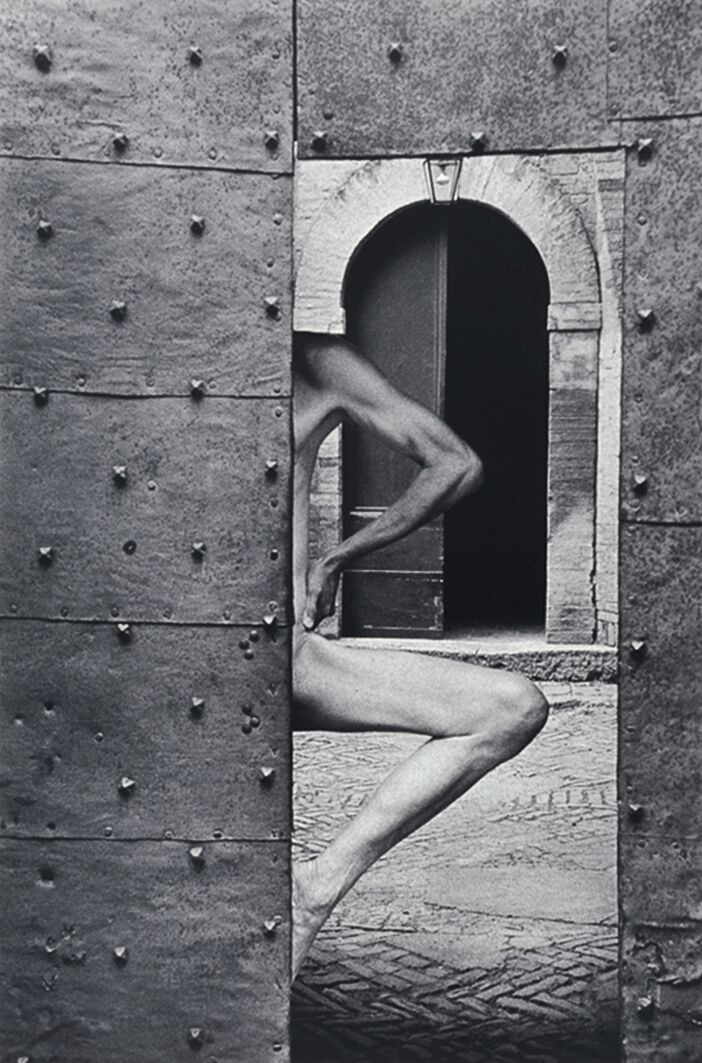
“Self-Portrait, Castello Tancredi Gate, Bibbiano, Tuscany, Italy” 2000/2005, by Arno Rafael Minkkinen, silver gelatin print, Gift of Arno Rafael and Sandra Hughes Minkkinen and the Robert Klein Gallery, Courtesy of the Edwynn Houk Gallery

“Community Pool, North End, Boston” 1949/2002, gelatin silver print, Gift of Arlette and Gus Kayafas, ©The Estate of Jules Aarons
In “Figure and Form” we are treated to luscious black and white silver gelatin prints that compare and contrast architectural and human forms. Arno Minkinnen’s study of triangles, arches and squares in Self-Portrait, Castello Tancredo Gate, Bibbiano,Tuscany, Italy becomes something of a visual pun by challenging our perception of the space. His delicate shoulder appears to be the base for the arch of a doorway beyond a courtyard. Famed architectural photographer Ezra Stoller (1915-2004) explored how people interacted with spaces built by modernist architects such as Eero Saarinen. In TWA Terminal Interior, Eero Saarinen, he guides our eyes around the bulbous architectural details of the iconic Kennedy Airport terminal through the movements of passing travelers. Jules Aarons, on the other hand, photographed vernacular urban scenes, and his Community Pool, North End with its organic figures lying languidly on geometric cement steps that recall a Greek amphitheater is simply sublime.
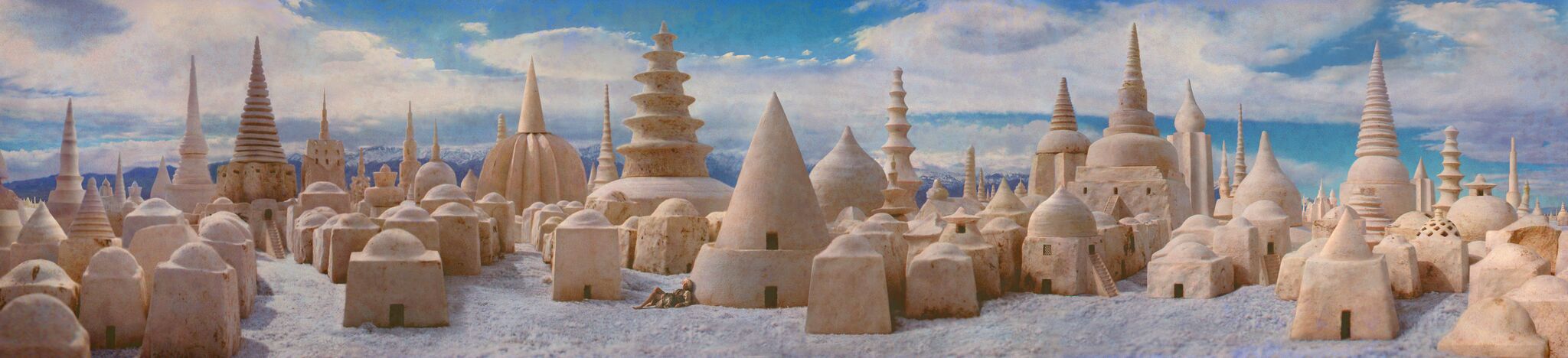
“The New City of Salt” 2001, by Kahn/Selesnick, archival digital print, Museum Purchase, courtesy of the artists
The final section of this exhibit, “Architectural Fantasies” features more painting, printmaking and drawing than photography, but Abelardo Morell’s Camera Obscura image, Santa Maria della Salute with Scaffolding in Palazzo Bedroom from 2007 creates an interesting visual dialog with a large surreal pencil on paper drawing by Donald Shambroom called Excavation III. Both works feature domes or arches that are upside down; walking on the ceiling… an idea that most children and maybe a few adults have imagined. Similarly, Kahn and Selesnick’s The New City of Salt is a confection of muted color, domed buildings and curious places for the eye to wander and then rest on a tiny reclining figure.
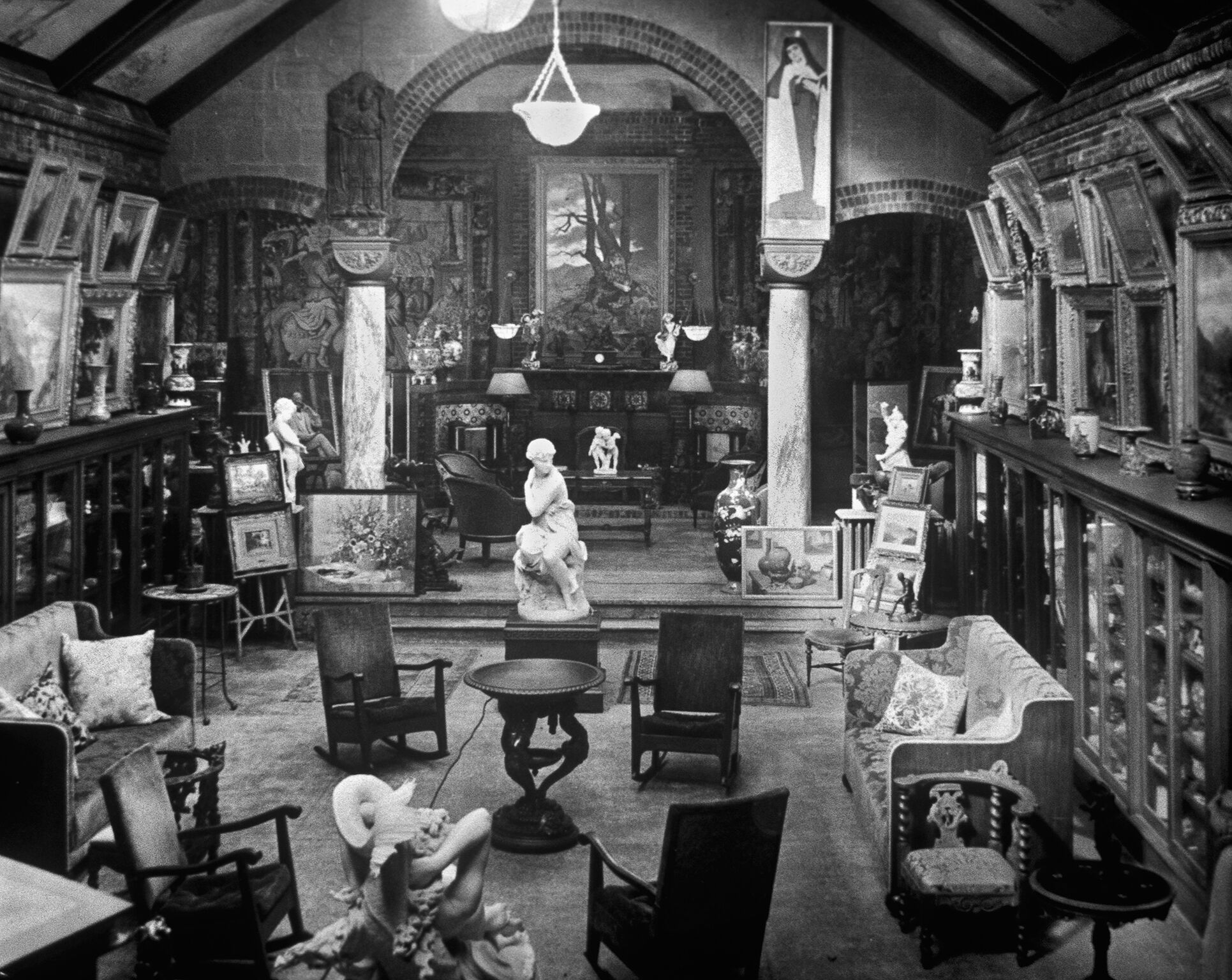
Dewey Family Gallery at the Decordova Museum, ca. 1910, showcasing Julian and Lizzie deCordova’s extensive collections of found and decorative arts, courtesy of the deCordova Museum
Architectural fantasies were inspired by the history of the deCordova Museum’s building which was originally constructed to resemble a European castle, fulfilling Julian and Lizzie de Cordova’s fantasies of living in unique spaces. A slideshow of how the building was transformed from a private residence to a public museum over the course of several decades accompanies this gratifying show.

“Best of All Possible Worlds” installation by Saul Melman photographed by Suzanne Révy
As you leave the museum, be sure spend a little time in Saul Melman’s “Best of All Possible Worlds”, a sculptural installation of eight translucent casts of doors installed according to the footprint of the artist’s Brooklyn apartment, which the museum accurately describes as a “ghostly exploration of personal, lived space.” It’s the perfect complement to this exhibition.
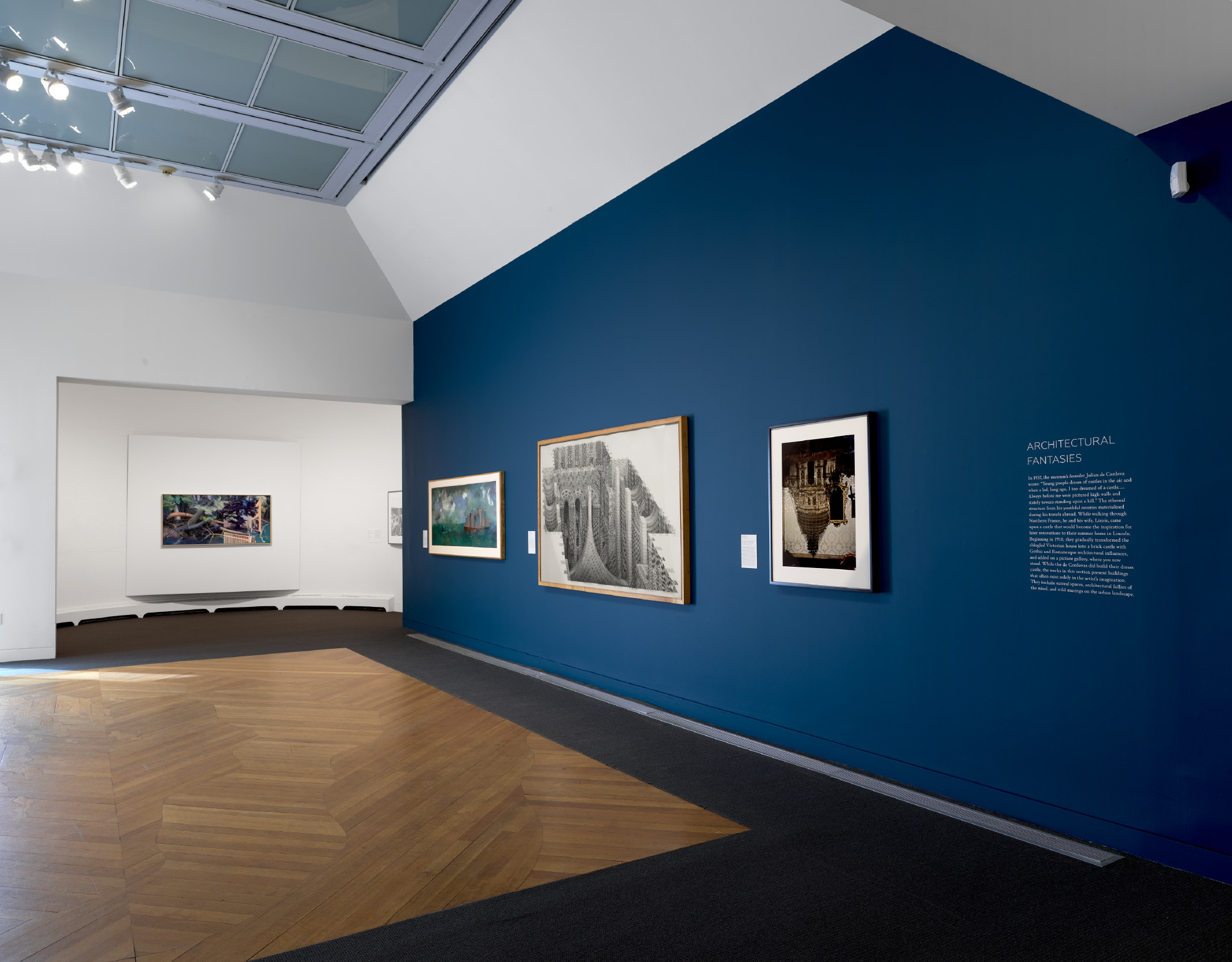
(Featured Image) Installation view, “Lived Space: Humans and Architecture” in the Dewey Family Gallery at the deCordova Sculpture Park and Museum, featuring “Camera Obscura Image of Santa Maria della Salute with Scaffolding in Palazzo Bedroom” by Abelardo Morell (right) alongside “Excavation III” a drawing by Donald Shambroom. Photograph courtesy of the museum.
For more information about this exhibit, go to: Lived Space: Humans and Architecture
deCordova Sculpture Park and Museum, Lincoln, Massachusetts
On view through September 30, 2018
 Share On Facebook
 Tweet It


